Welcome to Zhuhai HDL Computer Products Co., Ltd.


Research Report on the Development of the Magnetic Tape Storage Industry
Magnetic tape is a strip of material coated with a magnetic layer used for recording sound, images, digital data, or other signals. It is the most widely produced and used type of magnetic recording material.
2025-01-18
1. Overview
01
Definition of Tape Storage
Tape is a strip of material coated with a magnetic layer used to record sound, images, digital or other signals. It is the most widely produced and used magnetic recording medium.
Tape is usually made by coating a plastic film base (substrate) with a layer of granular magnetic material or by evaporating and depositing a magnetic oxide or alloy thin film. Paper and celluloid were once used as the base, but now polyester film, which has high strength, good stability, and is not easily deformed, is mainly used.
02
Tape Storage Protocols
Tape storage formats are mainly divided into two camps: linear recording and helical recording, each with its own advantages. The tape formats using linear recording mainly include LTO 、 DLT 、 SuperDLT etc., while the main helical recording tape formats include DAT 、 AIT etc.
Linear recording tapes are dominated by the LTO format (Linear Tape Open ), the Linear Tape Open protocol ) which is the mainstream. This protocol was jointly developed by HP 、 IBM 、 Quantum these three manufacturers in 1997 year 11 month. It combines the advantages of linear multi-channel and bidirectional tape formats, based on service systems, hardware data compression, optimized track surfaces, and high-efficiency error correction technology, improving tape capacity and performance. According to the original plan, LTO there are two formats, namely Ultrium and Accelis Currently, the format that has been released is Ultrium format, which uses a single-axis 1/2 inch tape, with the first generation product having a native maximum capacity of 100GB and a maximum transfer rate of 15MB/s To ensure the interchangeability of the Ultrium format, an independent third-party organization —LTO Compliance Verification Entity (CVE) , conducts compatibility testing every year on products conforming to this format to ensure these products comply with the format specifications and that products from various manufacturers and different generations are interoperable. Ultrium Helical recording tapes are dominated by
(Digital Audio Tape DAT format ), digital audio tape technology. This technology was originally developed by HP and Sony, converting data into digital form before storage. Early ) technology was mainly used for sound recording. With continuous improvements, later, DAT it was applied to data storage, covering all server platforms, from DAT PC servers to Unix servers, providing flexible storage solutions for enterprise environments. The technology developed from DAT to DDS-1 , currently offering a maximum storage capacity of DDS-4 and a full tape search time of less than 40GB minutes. 1 DDS The market remains huge, and tape continues to be active in the tape market due to its unique characteristics. DAT Currently,
format tape libraries (tape drives and tapes) occupy the vast majority of the tape library market, while LTO tape libraries hold a smaller market share, and other format tape libraries are less used. DAT Globally,
the leader in the tape storage industry is LTO , which dominates the development of IBM technology. After LTO years of development, 20 , it has developed the IBM generation of 10 technology. Among them, LTO released 2012 year IBM protocol and products, LTO-6 month 2015 year IBM protocol and products, LTO-7 month 2017 year 10 protocol and products. The mainstream tape product specification on the market is IBM protocol and products, LTO-8 Below is a performance comparison table of tape storage products from the first to the seventh generation. LTO-7 Tape Storage Product Generations and Performance Comparison Table LTO month,
LTO released the latest generation of
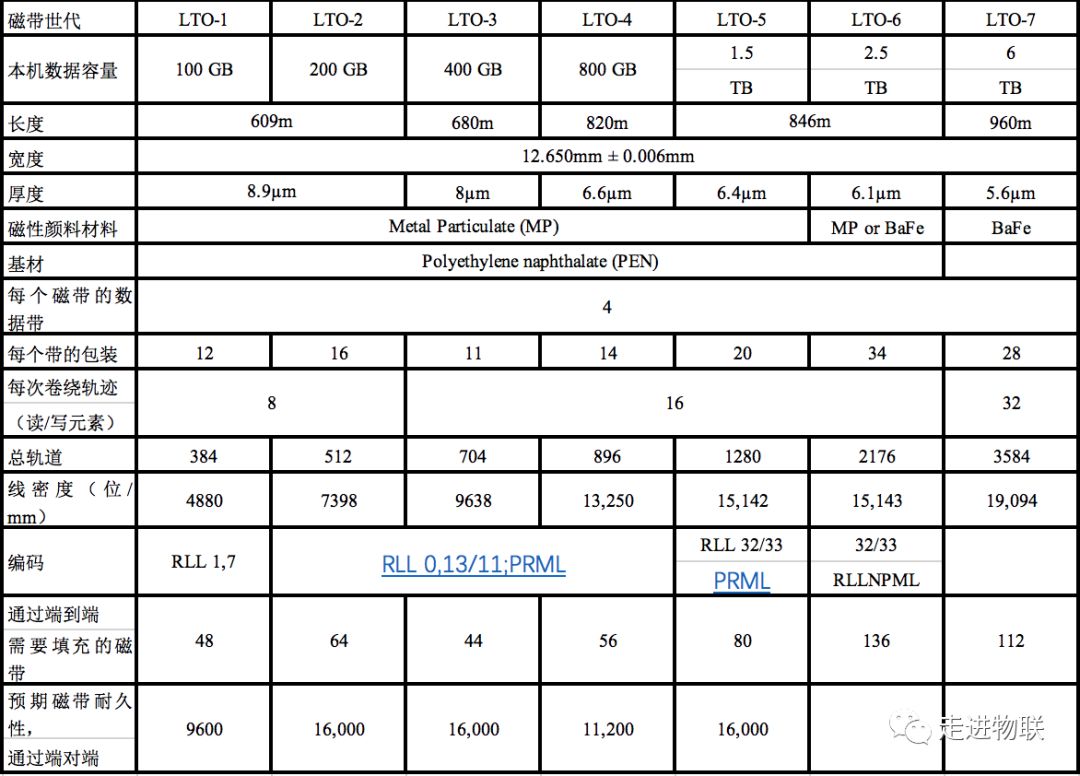
2017 year 10 protocol and related products, with a product capacity of IBM In fact, LTO-8 and 12.8TB alliances have formulated a technical roadmap for the subsequent IBM protocol, LTO in LTO 协议后续的技术路线图,在LTO-9/10 In the protocol, the standard capacities of tapes are respectively 26TB、48TB
03
Tape storage devices
The devices used for tape storage mainly include tape drives and tape libraries.
Tape Drive ( Tape Drive ) generally refers to a single drive product, usually composed of a tape drive and tape, which is an economical, reliable, large-capacity, and fast backup device. This product uses high error correction coding technology and write-then-read channel technology, which can greatly improve the reliability of data backup. According to different tape loading methods, it is generally divided into manual loading tape drives and automatic loading tape drives, i.e., autoloaders.
Broadly speaking, tape library products include autoloaders and tape libraries. Autoloaders and tape libraries are essentially an organic combination of tapes and tape drives. An autoloader is a tape drive and automatic tape changer located within a single unit, which can pick tapes from a cartridge containing multiple tapes and place them into the drive, or perform the reverse process. Autoloaders support routine backup processes and automatically load new tapes for daily backup tasks.
Narrowly defined tape libraries are tape-based backup systems similar to autoloaders. Tape libraries consist of multiple drives, multiple slots, and robotic arms, which can automatically remove and load tapes via the robotic arms. They provide the same basic automated backup and data recovery functions but also have more advanced technical features. They can operate multiple drives in parallel or have several drives backing up different servers, with storage capacity reaching PB ( 1PB=100 ten thousand GB ) level, capable of continuous backup, automatic tape search, and with management software support, can achieve intelligent recovery, real-time monitoring, and statistics, making it a primary device for centralized network data backup.
04
Hierarchical storage system
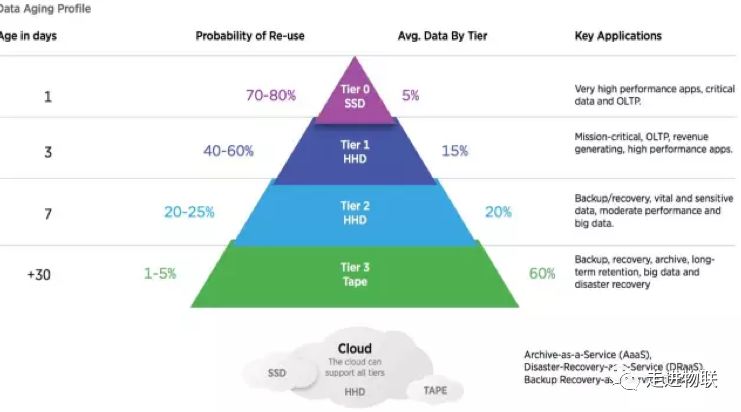
Principle of hierarchical storage: categorize data and allocate it to different types of storage solutions to reduce overall storage costs while still meeting service level requirements. Cloud computing has become a new storage solution that can integrate SSD 、 HDD and tape into its own hierarchical system.
Currently in the storage industry, to effectively reduce storage costs and improve operational efficiency, data storage generally considers data type, read speed, aging speed, and application scenarios comprehensively, adopting a hierarchical storage system. Generally, a 0~3 tier 4 storage system architecture is used. Among them, 0 the first tier is also called the primary storage tier, using SSD storage; 1 and 2 the second tier uses HHD storage, 3 and the third tier uses tape storage, forming a pyramid structure as shown below:
Hierarchical storage system in the storage industry
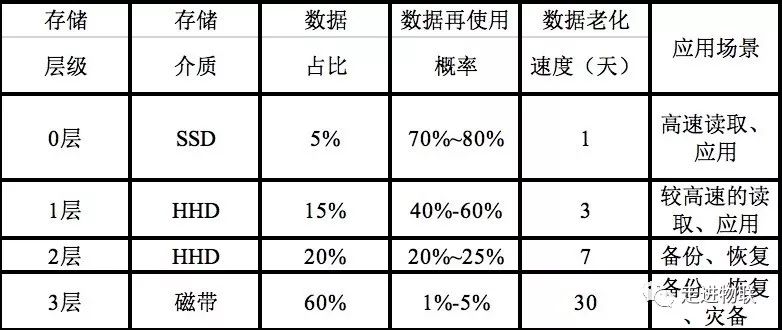
The pyramid-shaped data hierarchical storage system shown above can also be represented in a table as follows:
Data hierarchical storage system table
LTO-8 Tape data storage lifespan reaches 30 year ~50 years, with an error rate of 10^-19 and storage density reaching 12.8TB , in these aspects its performance has far surpassed HDD hard drives. Therefore, in data storage, especially for infrequently used cold storage, tape storage has greater advantages than hard drive storage. The performance comparison between tape and hard drives in cold storage environments is shown in the table below:
Performance comparison between hard drive storage and LTO-8 tape storage in cold storage environments
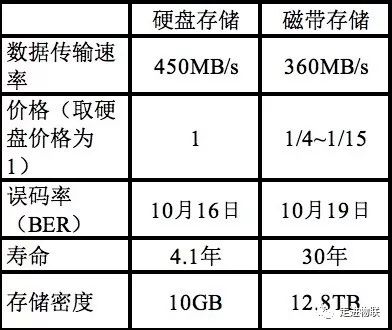
Because tape has overwhelming advantages over hard drives in cost, capacity, and reliability, enterprises prefer to use tape storage for data storage at the 3 tier.
2. Analysis of the current status of the tape storage industry
01
Analysis of foreign development status
Tape, as a carrier of an era's memory, has a history of 60 many years. Tape storage has become the safest, most energy-efficient, and cost-effective storage method currently, suitable for large-capacity backup, archival storage, as well as new application storage such as big data and cloud computing.
Development history
Since 1952 the first tape drive was successfully launched, the tape industry has continuously broken through and advanced between market choices and technological innovation, crossing three development stages over 60 many years.
( 1 ) 1952–1987 years, manual operation of tape storage.
1952 Year, IBM successfully released the industry's first tape drive, marking the beginning of the first period of tape development. This period lasted 35 years, mainly characterized by the use of round reel tapes and requiring manual operation ( for loading, unloading, and archiving. )。
1956 The first disk drive was successfully launched, followed by the division of storage: disks for online storage and tapes for offline storage. Shortly after, the industry introduced the concept of storage management applications — backup and recovery. Founded in 1969 year, StorageTek Company ( in 2005 was acquired in the year Sun company acquisition ) became one of the most successful tape drive manufacturers in the storage industry. During this period, IBM and StorageTek was the leading manufacturer in the entire tape market.
1984 In the year, cassette tapes replaced reel tapes, laying the foundation for many new developments in the tape industry. During this period, many optical disc manufacturers were eager to replace tape as a removable storage medium. However, this dream never came true from beginning to end.
( 2 ) 1987–2002 In the year, automated tape libraries created " nearline concept ”。
1987 Year, StorageTek The successful launch of automated tape libraries marked the beginning of the second period of tape development, which is also called StorageTek known as " the nearline era ” . Previously, offline tape storage required a lot of manual labor; after the birth of automated tape libraries, " nearline ” became the standard name for a new type of storage between online disk storage and offline manual tape operation. Automated storage services eliminated problems that were easily caused during manual tape operations. It can be said that StorageTek 's nearline solutions injected new vitality into the continued development of the tape industry.
By the end of the second period, automated tape libraries were no longer exclusively used for mainframes; many non-mainframe computing markets also adopted automated tape libraries. StorageTek became the undisputed leader in the field of automated tape libraries. Starting from 1997 the year, IBM and StorageTek began exploring virtualization and innovatively proposed the concept of virtual tape libraries for large mainframes.
However, at the end of the second period, the tape industry faced huge challenges brought by the sharp decline in disk prices. During this time, some IT personnel proposed the idea of completely replacing tape with low-cost disks. Although this idea had many immature aspects, it indeed reflected the impact of low-cost disks on the development direction of tape library business.
( 3 ) 2002 year – Now, tape development has once again ushered in a golden development period.
Since 21 the beginning of the century, the appeal of disks in the storage market has rapidly risen. At the same time, tape quietly entered the third development stage without much notice. 2002 In the year, tape technology experienced its 50 most remarkable technological breakthrough in its — year development history: the capacity of tape cartridges exceeded that of the largest disk drives for the first time. ; This changed the game in the storage industry: in the past, the amount of information a disk could hold often required multiple tape cartridges to store.
But now the situation is completely reversed; one tape cartridge can hold data equivalent to multiple disks. In the past, tape was the first choice for backup, recovery, and archiving, but this technological innovation brought tape into all fields requiring long-term data preservation. Even with the introduction of cheap disks into the backup and recovery market, tape still plays an irreplaceable role in the entire data protection architecture. Moreover, the better stability, reliability, and cost-effectiveness brought by the close combination of cheap disks and tape make it possible to achieve higher productivity with a complete ILM
Therefore, without the participation of tape, it is impossible to implement a truly cost-effective information lifecycle management strategy for users. StorageTek During this period, the technology-leading 2003 Year, StorageTek once again released an innovative product. Launched the world's first blade disk array based on ATA technology, , " BladeStore ” concept was born. BladeStore with its unique performance and low price filled the storage gap between enterprise-level online disks and nearline tape solutions, completely changing enterprise storage strategies.
The third era of tape brought significant improvements in reliability, capacity, and performance to the tape industry. After the year, 2002 the tape industry released more innovations, for example: in the second era, tape cartridge capacity was less than 100GB average time between failures was 30,000 to 50,000 media lifespan was 4 to 10 years, automated robotic access time was about 10 seconds, and data storage cost was about GB 3 to 8 dollars. In the third era, tape cartridge capacity was less than even exceeded 200GB 25 to 40 1TB average time between failures was 15 to 30 media lifespan was years, automated robotic access time was less than 0.2 to 3 5 seconds, and data storage cost was about GB 3 to 8 dollars. Today, the total amount of new digital information generated globally each year exceeds
hundreds of exabytes, so the market demand for large-capacity storage is obvious. It is estimated that globally 5亿兆,因此市场上对大容量存储的需求显而易见。据估计,全球80% Digital information is stored on mobile storage media, primarily magnetic tapes, followed by disks. Only a small portion of data is stored on optical discs, and optical discs are increasingly becoming storage media for consumer electronics or entertainment products, no longer active in the data-centric storage market.
In the future, magnetic tapes are expected to continue increasing capacity at a faster rate than disks, thereby widening the cost-performance gap with disks. The entire IT industry is gradually realizing that, in the long term, magnetic tapes have more obvious advantages and potential.
Although low-cost SATA disks have become a common choice for backup and recovery, many enterprises still use magnetic tapes as the medium for backup and recovery. However, the greater potential for tape products lies in fixed content, archiving, and regulatory compliance applications. It is estimated that the annual growth rate of these applications is between 60% and 90% which is the fastest-growing segment in the storage industry. The growth of digital storage and the importance of data to enterprise business require future enterprise tape products to support 24/7 operation with better performance, higher reliability, and less manual management input. 24x7 From the perspective of tape technology development prospects, magnetic tape is fully capable of fulfilling its mission.
Like the first two stages of tape development, the third stage of tape development has also ushered in a golden era. The growth opportunities for tape storage solutions will not only continue but also accelerate under the stimulation of the following factors: tape cartridge capacity will continue to grow at an unprecedented speed. Currently on the market, LTO-7 tape cartridge storage capacity 6TB , and LTO-8 tape cartridge storage capacity 12.8TB。
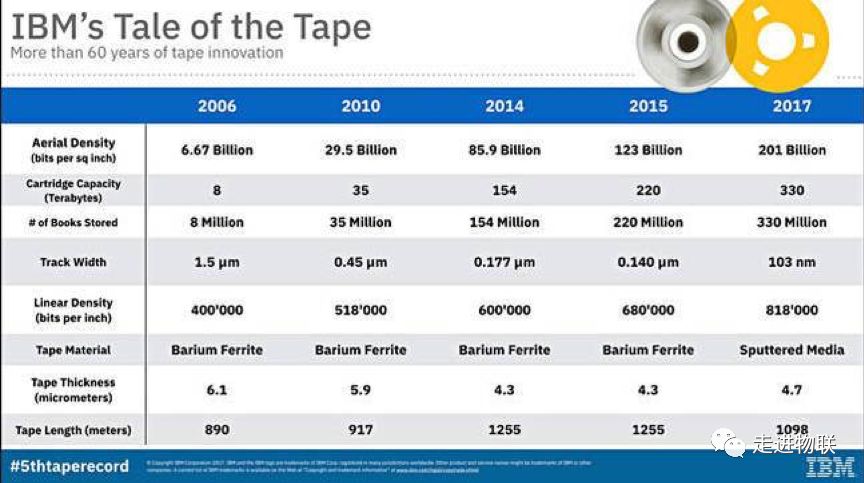
Since 20006 from 2017 Year, IBM to 5 scientists have successively announced new tape storage records. 2006 year, 8TB The original capacity of tape has been increased from 2017 year, 330TB。
2017 year 8 protocol and products. The mainstream tape product specification on the market is 2 to IBM On the 28th Magnetic Recording Conference (TMRC 2017) 330TB scientists announced the latest world record of storing 201GB per tape cartridge. 330TB This new record greatly increased storage density, allowing each square inch of tape to store of data, which means the original capacity of each tape cartridge is This record was achieved on a sputtered tape prototype developed by Sony Storage Media Solutions.
2006 year ~2017 year IBM5 times breaking the world record for tape storage.
Market size
According to 2012 the IDC Worldwide Quarterly Dedicated Backup Device Tracker report, 2007 the global tape (including tape drives and tapes) sales market, 22.8 market size in year 2008 the global tape (including tape drives and tapes) sales market, 21 billion USD, 2009 billion USD, affected by the financial crisis, the global tape sales market size declined by one quarter, 15.8 to 2009 billion USD. In 6.293 year, revenue from tape drives was 2008 billion USD (a decrease compared to 32% year), 9.555 year, revenue from tape drives was 2008 billion USD (a decrease compared to 19% and revenue from tape media was LTO ). Among them, 2012 format tape libraries dominate the market. The following two charts show the world's top five tape library manufacturers in year 、 IBM 、 EMC 、 HP 、 Quantum Symantec 2012 in year 2 the 3 and
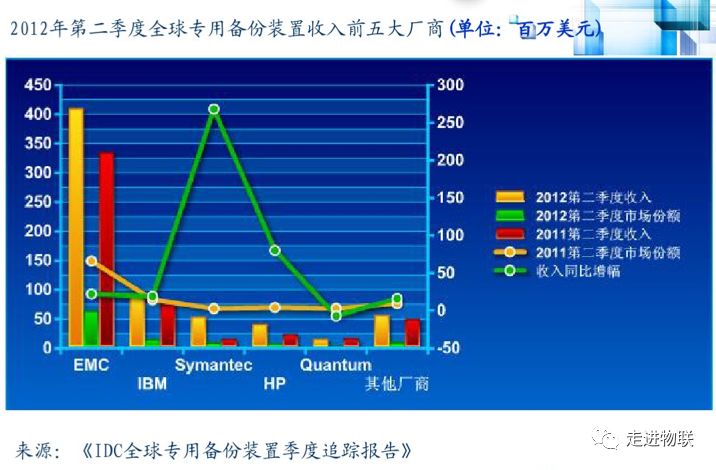

quarters' tape library sales. 2015 According to the 2015-2020 China Tape Library Industry Market Analysis and Development Trend Research Report by China Industry Research Network, 2011 the global tape market sales in year 10.11 billion USD. After year 2014 the tape sales market size gradually declined to 6.55 billion USD.
According to two domestic and international market research reports, the global tape overall market sales show a yearly shrinking trend. At the same time, 2012 year, IDC the report also points out that with the demand for long-term archiving, recovery, compliance, and disaster recovery information storage, since 2009 year, the global automated tape library market has still grown at an annual rate of 5% According to 2015 the mid-year Industry Research Network survey report, in 2014 year, global tape product shipments exceeded 20000PB , an increase of 13% compared to the previous year. The reason for the rapid growth is: IT Executives and cloud service providers have discovered new uses for tape technology. Tape technology can provide them with unique operational and cost advantages. The application of tape has expanded from traditional data backup to new fields including archiving.
In summary, this indicates that the overall demand for tape drives, tape libraries, and tape products in the global tape market is declining. However, if further subdivided, it can be found that the demand for tape drives has declined the most. Meanwhile, there is a slight increase in demand for tape libraries in the market, but the increase in demand for tape libraries is not enough to offset the overall decline in tape market sales. Additionally, due to technological advances, tape product prices have dropped, so although the demand for storage capacity has increased, the overall market transaction price has indeed declined.
Leading enterprises
Currently, in the global tape market, American companies dominate. After multiple mergers and reorganizations, American companies currently lead the tape market. IBM 、 HPE 、 Oracle 、 Quantum 、 Dell EMC , as well as Japan's Fujitsu, hold leading positions in the industry. Among them, 2005 year Sun Acquisition StorageTek ,2009 year Oracle Acquisition Sun 。2016 In the year HP split into HPI and HPE 。2015 year Dell Acquisition the world's top five tape library manufacturers in year 。 Quantum was once DLT the largest manufacturer of format tapes, 2000 in the year sold its hard drive business to Maxtor, withdrew from the hard drive business, but still focused on tape cartridge data storage.
2017 Year, Spectra Logic company in 2017 the year data storage outlook report predicted, IBM will become the only tape drive manufacturer; it also predicted that flash technology and tape will coexist for a considerable time, becoming mainstream storage technologies to meet nearline and archival needs.
IBM The company, besides leading the development of LTO format tape standards, also owns proprietary format tape products. 2018 year 5 protocol and related products, with a product capacity of IBM launched a IBM proprietary format tape drive TS1155 which offers 15TB raw capacity, higher than the raw capacity of the protocol developed by LTO-8 format 12.8TB In IBM tape library products, there are multiple product lines: entry-level tape libraries, entry-level tape drives, mid-range products, enterprise-level products, etc.
IBM Entry-level tape library products mainly include: IBM TS3200 tape library, IBM TS3100 tape library, also including IBM TS2900 autoloader, IBM SpectrumArchive management software.
IBM Entry-level tape drive products mainly include: IBM TS2280 tape drive, IBM TS2270 tape drive, IBM TS2260 tape drive, IBM TS2250 tape drives.
IBM Mid-range products mainly include: IBM TS4500 tape library, IBM TS3310 tape library, IBM TS3200 tape library, IBM TS3100 tape library, TS4300 tape library, IBM 7226 multimedia storage cabinets.
IBM Enterprise-level tape library products mainly include: IBM TS1155 tape drive, IBM TS1150 tape drive, IBM TS1140 tape drive, IBM TS4500 tape library, IBM SpectrumArchive management software.
IBM TS1155 tape drives

IBM® TS3310 tape library
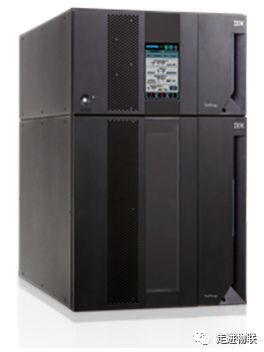
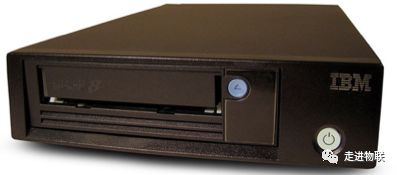
2007 year 10 protocol and products. The mainstream tape product specification on the market is 12 to IBM released LTO-8 tape drives. LTO-8 The raw capacity is 12.8TB and the compressed capacity is 30TB . While IBM indicates that the new tape drive accelerates data access time while reducing the price to below half a cent per GB .
IBM LTO-8 tape drive
According to domestic users' evaluations of foreign tape suppliers and their products, IBM there are advantages in overall technology and after-sales service, but the price is relatively high; HPE and Dell EMC products are similar, but Dell EMC products are relatively HPE products are somewhat cheaper.
02
Analysis of domestic development status
For a long time, tape product standards and technologies have been dominated by American and Japanese companies. The domestic tape market is basically composed of foreign tape products. Moreover, the tape market scale is limited, especially impacted by optical discs and hard drives, 20 tape exited the consumer market many years ago. In the enterprise market, compared to abroad, domestic development and application in data storage, backup and disaster recovery, compliance, etc., are slightly lagging.
In recent years, with the development of domestic cloud computing, cloud storage, and other cloud services, as well as the formulation and implementation of the national big data strategy, domestic cloud storage development has been strongly promoted. Alibaba Cloud, Tencent Cloud, Baidu Cloud, Huawei Cloud, and others have sprung up like mushrooms after rain, competing for the domestic market and even targeting the international market. Of course, due to the US government's intensified strategic containment of China, Alibaba Cloud's attempt to enter the US market failed, 2018 year 9 In the month, Jack Ma had to abandon the strategy of competing with Amazon and Google in the US cloud service market and withdrew from the US.
According to domestic Zhiyan Consulting Company's estimates, 2017 the global cloud storage (excluding hardware) market size in the year was 147.24 billion US dollars, and the Chinese cloud storage market size was 13.55 billion USD.
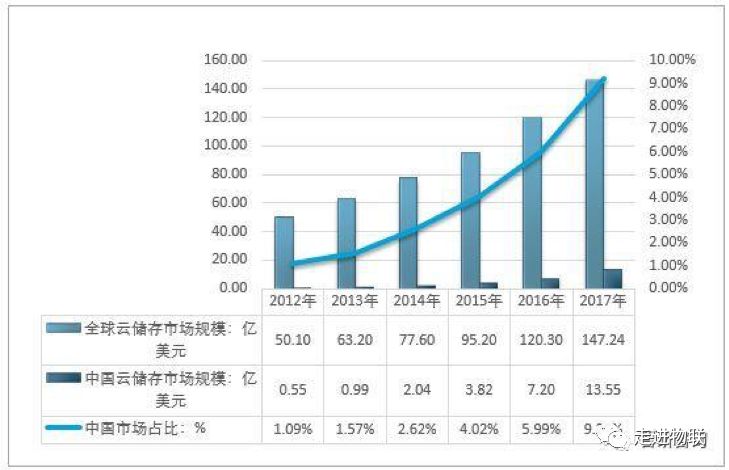
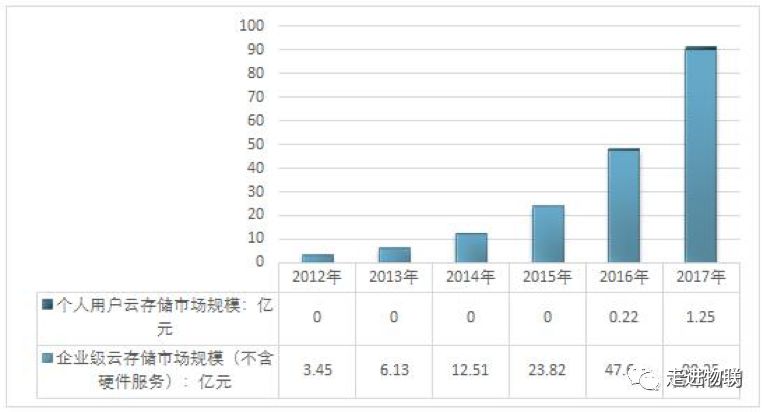
2017 In the year, China's cloud storage industry size was about 91.5 billion yuan, of which the enterprise cloud storage industry size was 90.25 billion yuan, and the personal user cloud storage industry size was about 1.25 billion yuan.
2017 In the year, Alibaba Cloud held 47.6% The market share ranks first, with Tencent Cloud competing fiercely, and Baidu Cloud making a comprehensive effort. AI Technology is trying to catch up, NetEase Cloud focuses on differentiated development; the carrier cloud formed by Unicom and Telecom mainly serves government and enterprises, with a stable market share; Huawei, leveraging its years of hardware capabilities, user resources, and channel advantages, also holds a certain market position. The cloud storage market, especially the internet cloud market, is highly competitive.
Although the domestic cloud storage market is highly competitive, the domestic tape storage market is lukewarm. Currently, Lenovo and Inspur mainly provide tape drives and tape products in China.
1. Lenovo
Lenovo's tape storage system mainly provides tape backup, recovery, and archiving solutions for data protection and long-term retention. Lenovo's tape library products mainly include: TS3200、TS3100、TS2900。
Lenovo TS3200 tape library
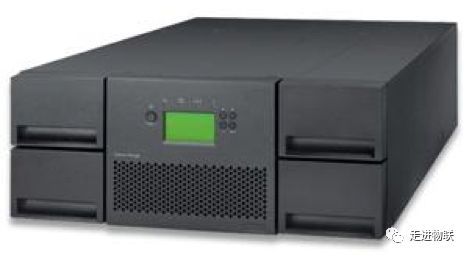
Lenovo TS3200 Introduction to tape library products:
Lenovo TS3200 Tape libraries offer excellent large-capacity, high-performance tape backup solutions. This product uses the latest generation of LTO technology to help customers economically and efficiently meet the growing storage demands. TS3200 and its storage management applications can meet requirements for capacity, performance, data protection, reliability, economy, and applicability, adopting LTO Ultrium tape technology, a feature-rich entry-level tape storage solution.
2. Inspur
Inspur's tape library products mainly include: TL1000、TL2000 to meet the backup, recovery, and archiving data storage needs of industry users' data environments.
( 1 ) Flexible scalability
Inspur tape libraries are very suitable for medium to small data environments to meet backup, recovery, and archiving data storage needs. They can scale up to 4 units LTO tape drives and 48 tape cartridge capacity, providing a maximum compressed storage capacity of 240TB aiming to economically and efficiently meet the growing storage demands using LTO technology.
Inspur tape libraries offer 8 Gbps fiber channel and 6Gbps SAS interfaces, which can connect to various open system servers. Sequential or random access tape libraries adopt standalone or optional rack-mount configurations.
( 2 ) Efficient backup performance
Inspur tape libraries support industry-leading LTO6 drives and can read and write tape cartridges at higher data transfer rates, LTO5、LTO4 and read LTO3 tape cartridges. After compression, they support native data transfer rates up to 400MB/s .
Data rate matching enhances reliability: dynamically adjusting tape drive speed to match host or network operation speed, thereby improving performance and reducing mechanical wear on the tape drive.
( 3 ) Convenient and reliable management
Barcode readers are a standard component in tape libraries, supporting operation in sequential or random access modes. Inspur tape libraries also feature remote management capabilities, allowing remote management of the tape library through a Web interface.
Inspur TL2000 Tape libraries have redundant power supply options. With redundant power supplies, the library can continue operating if one power supply fails. The redundant power system monitors the status of each power supply and power fan. Redundant power supplies can be installed without disconnecting the library's power, improving reliability.
Inspur tape library TL series products
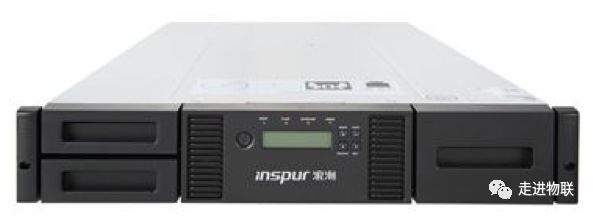
From the tape library products provided on Lenovo and Inspur's homepage, the related tape library technology is still mainly based on LTO-6/5/4 . Compared with the foreign leader IBM there is a large gap. IBM2012 Released in the year LTO-6 month 2015 Released in the year LTO-7 month 2017 year 12 Released in the month LTO-8 protocol and tape drive products. This indicates that in tape library R&D, domestic products lag behind foreign ones by about two generations. Meanwhile, IBM the proprietary tape library standard tape library performance launched by LTO is more powerful than the open
Previous Page
Related Information

Tape storage successfully joins the "Zero Carbon Computing Power Co-construction"
Carbon emissions may be the most important thing that human society needs to learn to control in the coming years. According to reports, the primary source of carbon emissions in the United States is the power system. Previously, electricity-related emissions were not accurately measured, making it impossible to effectively manage carbon emissions.
Introduction to LTO Linear Tape Open Technology
The main tape formats in the current tape market include LTO, DDS/DAT, DLT, and AIT. Among them, LTO is the mainstream tape format. This article will mainly introduce the LTO tape format.
Online Consultation
We can recommend suitable products based on your needs. Please fill out the form below, and we will contact you promptly! Please enter content...
Contact Number
Company Address
No. 1, Pingxi 6th Road, Nanping Science and Technology Industrial Park, Xiangzhou District, Zhuhai City, Guangdong Province (Postal Code: 519060)

Follow us