Welcome to Zhuhai HDL Computer Products Co., Ltd.


LTO boosts tape large-capacity storage technology beyond disk HDD
LTO Ultrium has its own brand and logo, and is continuously advancing the development of LTO technology. Currently, the companies involved in the formulation and promotion of the LTO Ultrium technology standards mainly include
2025-01-18
LTO Ultrium has its own brand and logo and is continuously advancing LTO technology. Currently, the main companies involved in the formulation and promotion of the LTO Ultrium technology standard are:
FujiFilm Corporation *
Hewlett Packard Enterprise *
IBM *
IMATION Corp.
Insurgo Media Services Limited
MAGSTOR
Maxell Holding, Ltd.
Quantum*
Silicon Craft Technology Public Company Limited
Sony Group Corporation *
SpectraLogic
Symply
TDK CORPORATION
Teijin Films Solutions Limited
Toray Industries, Inc.
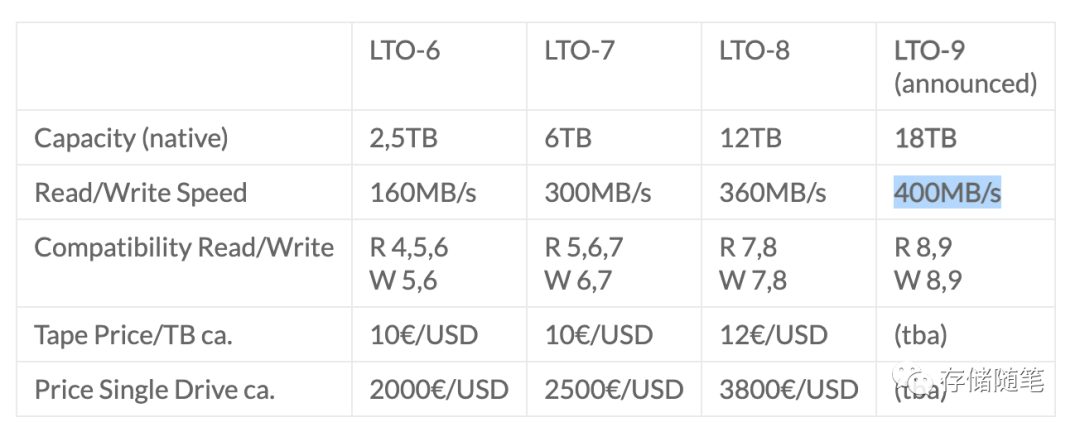
With the promotion by many participants, LTO Ultrium technology has now developed to the ninth generation Gen9. A single tape cartridge can support an uncompressed capacity of 18TB and a compressed data capacity of up to 45TB. The native read/write speed can reach 400MB/s per hour, and the compressed data transfer rate can reach 1000MB/s, meaning 3.6TB of data can be read or written per hour. The transfer speed has more than doubled compared to LTO6.
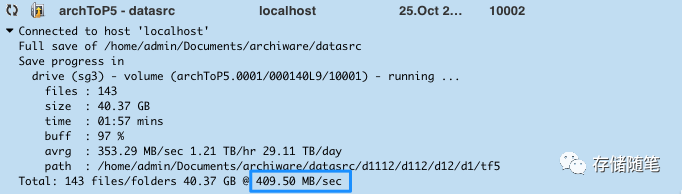
According to actual speed tests of the P5 archiving system, it can reach 409.5MB/s, meeting the official SPEC claimed standards.
LTO tapes have far exceeded the capacity of mechanical hard drives. Currently, even with the new HAMR/MAMR technologies, the maximum capacity of HDDs is only 30TB.

For LTO Gen5 and earlier generations, the compression ratio achieved was mainly 2:1. From Gen6 onwards, the compression ratio has reached 2.5:1. LTO Ultrium has currently designed up to Gen14, with a maximum compressed data storage of 1.44PB per tape cartridge, which is an astonishing data storage volume.
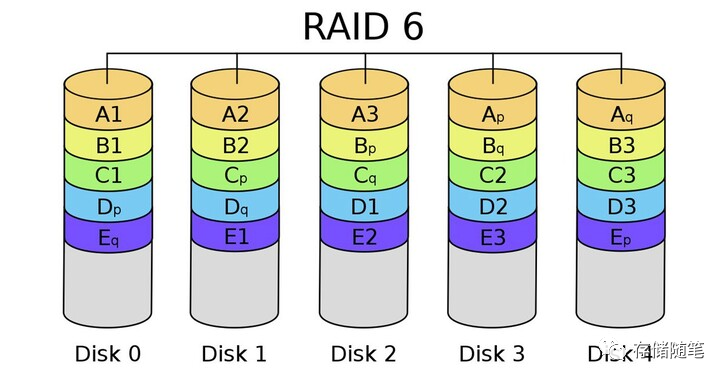
Besides high capacity, LTO also has its own features in terms of security. Overall, LTO's security is similar to an enhanced RAID6 system plus a very strong error correction code (ECC). RAID6 can tolerate the failure of any two disks, providing higher security than RAID5/RAID10.
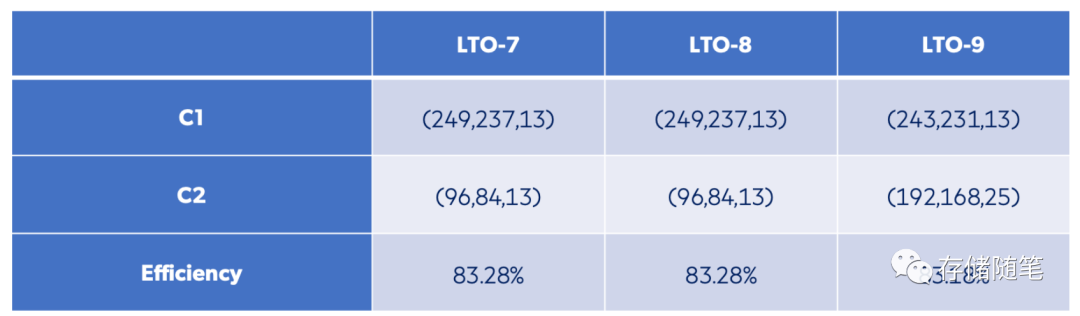
LTO uses two-dimensional cross error correction codes C1 and C2, both based on Reed-Solomon ECC principles. C1 is responsible for checking metadata and user data on each channel, while C2 checks the metadata and user data across multiple channels after C1 encoding.

In the LTO8 and LTO9 technology standards, two error correction modes are provided:
All error: In this mode, C1 and C2 perform error correction independently without any correlation between them.
Erasure (a=1): In this mode, if C1 error correction fails, the failure information is passed to C2, which can detect and correct a one-byte error using its 2-byte check capability.
Especially in the latest LTO9 technology standard, the C2 code parameters have doubled compared to before, while the error correction efficiency remains basically unchanged.
UBER (Uncorrectable Bit Error Rate) represents the probability of data errors during reading. Compared to HDDs, LTO9's UBER is 1E-20, while HDDs are 1E-15, which is 5 orders of magnitude higher. This means HDDs may encounter errors when reading 125TB of data, whereas tapes only encounter errors after reading 12.5EB of data, indicating very high reliability. However, tapes are also magnetic storage and require attention to moisture and demagnetization.
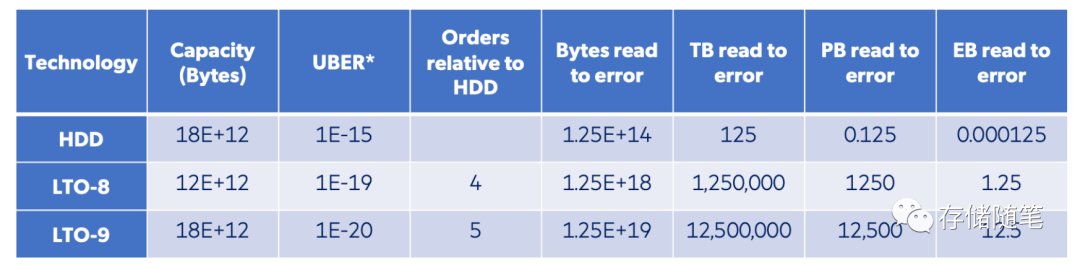
In reliability evaluation, we also use a parameter of 9's magnitude to reflect durability:
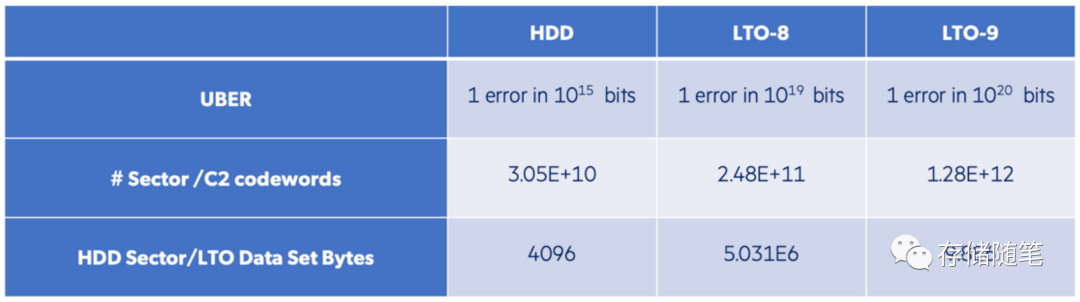
For example, HDD's UBER is 1e-15, meaning there is one error in reading 10^15 bits. Converting 10^15 bits / (4096 bytes * 8 bits/byte) = 3.05E+10, we call this 10 nines of durability.
LTO9 tape's durability is 12 nines, which is 2 orders of magnitude higher than HDD.
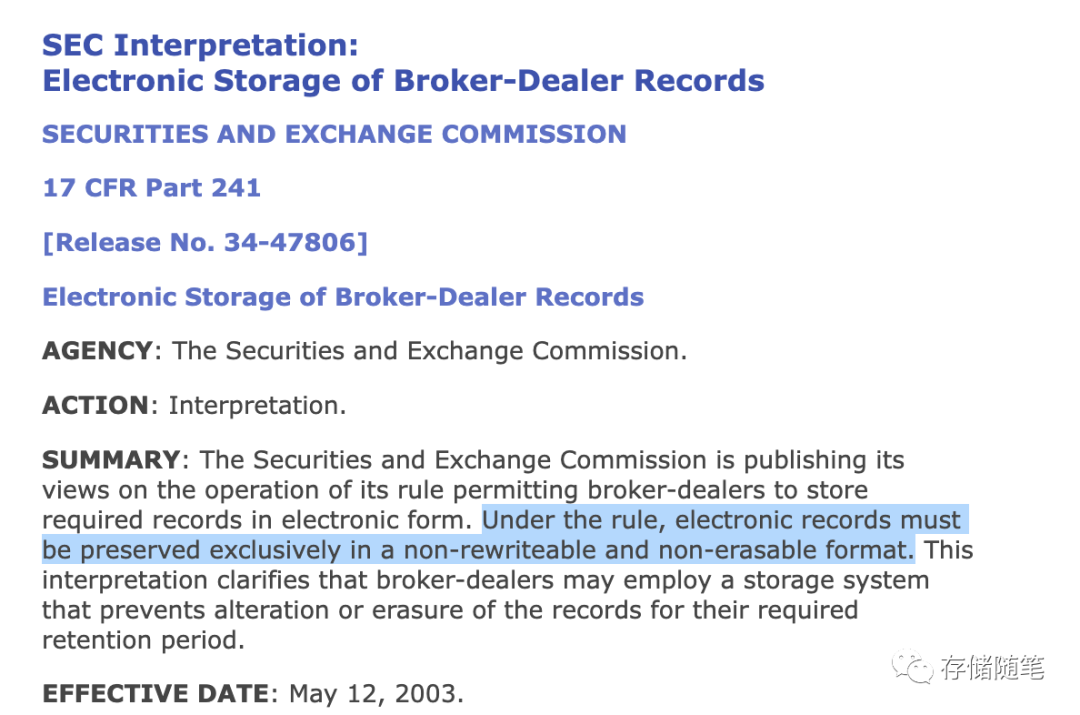
Additionally, due to some special scenarios, such as SEC security regulations, electronic information storage must use non-rewritable devices. This requires storage media to have WORM (write once, read many) characteristics. This is also a feature of LTO tapes. Having WORM can prevent data tampering and maintain long-term data storage.
SEC 17a-4(f)(2)(ii)(A): "The electronic storage media must preserve the records exclusively in a non-rewriteable, non-erasable format."
WORM data protection features are divided into multiple security levels. The write-once function can be implemented through software/firmware restrictions, but the safest is to achieve write-once WORM security through physical media, which is also the highest security implementation.

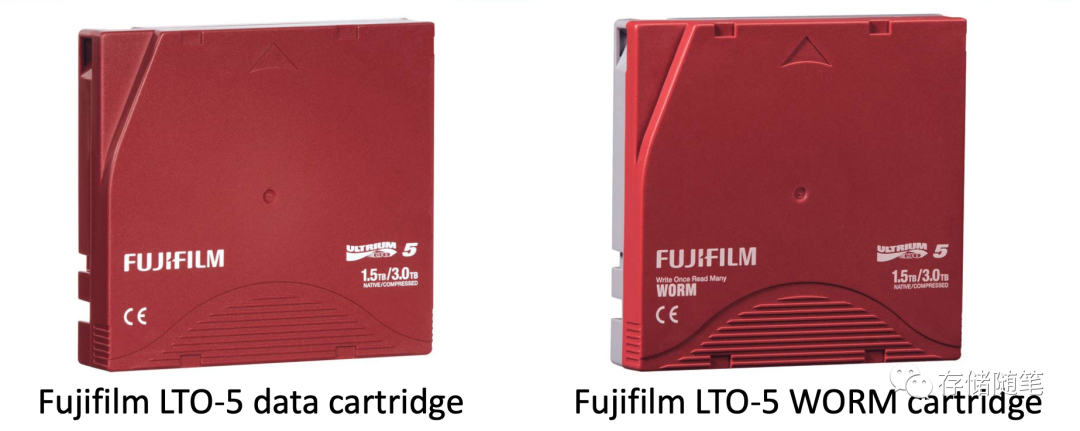
When manufacturers provide tapes, they usually use different colors of cartridge cases to distinguish whether the tape is WORM media. For example, Fujifilm's two LTO5 tapes: the non-WORM tape on the left has an all-red case, while the WORM tape on the right has a gray and red case.
Previous Page
Next Page
Related Information

Tape storage successfully joins the "Zero Carbon Computing Power Co-construction"
Carbon emissions may be the most important thing that human society needs to learn to control in the coming years. According to reports, the primary source of carbon emissions in the United States is the power system. Previously, electricity-related emissions were not accurately measured, making it impossible to effectively manage carbon emissions.
Introduction to LTO Linear Tape Open Technology
The main tape formats in the current tape market include LTO, DDS/DAT, DLT, and AIT. Among them, LTO is the mainstream tape format. This article will mainly introduce the LTO tape format.
Online Consultation
We can recommend suitable products based on your needs. Please fill out the form below, and we will contact you promptly! Please enter content...
Contact Number
Company Address
No. 1, Pingxi 6th Road, Nanping Science and Technology Industrial Park, Xiangzhou District, Zhuhai City, Guangdong Province (Postal Code: 519060)

Follow us